
Banarasi Paan - Essential Spiritual Experience in Kashi, Varanasi

Banarasi Paan

Cuisine
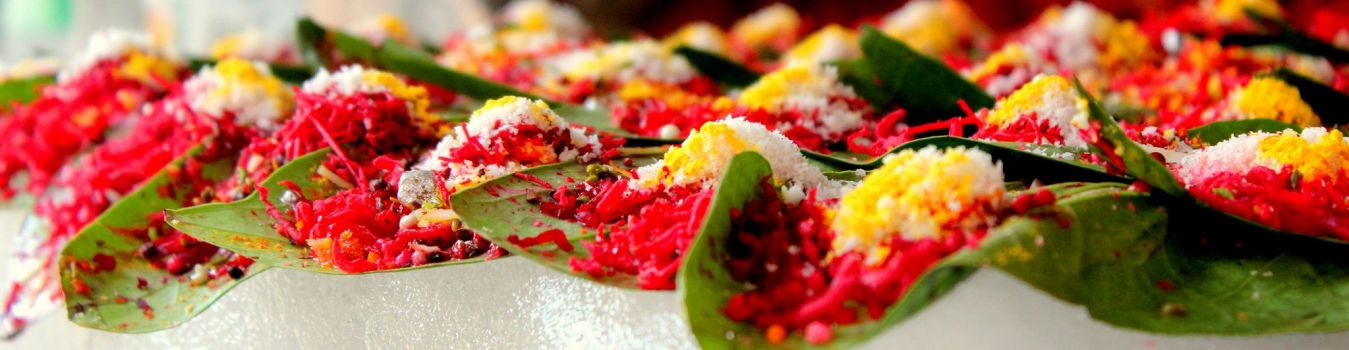
Banarasi paan is famous across the world because of its awesome taste. People usually eat PAAN after meal as a mouth fresher to remove the bad odour from the mouth and also because it helps in digestion, but when it comes to Benarasi paan, one can have it any time of the day. Ingredients of every paan are almost the same, but the process of making Banarasi paan makes it special and different from other paan. The creativity of the paan makers and their style of serving add to the taste. Plain surti is thoroughly washed with water for hours. It is then mixed properly  with barash, small cardamom, peppermint powder and rose water. Plain surti does not result in dizziness even if consumed in high quantity. The leaves of paan , which brings tears to dedicated Banarsis’ eyes, is called Maghai and is grown in Bihar. The Maghai leaf is soft and melts in the mouth, to Pandeyji, who points out that it leaves no resha (strands) in the teeth, all are in agreement. Only not the Benarasi paan walas work hard to prepare their special paan, but they also serve it in a different way. In Delhi or Lucknow, lime and other ingredients are mixed hours before, but in Varanasi, the paanwala put all ingredients while serving. It is believed that if the ingredients are mixed earlier, then it loses its taste. When the customers ask for a paan, thepaan wala prepares it quickly and serve it with his right hand. While serving, they follow the nawaabi style with the left hand touching the elbow of the right hand. This unique style of serving adds to the taste. These mouthwatering street snacks will create everlasting food memories and you must try them.

Deep Dive: Banarasi Paan

The Banarasi Paan is world-famous, immortalized in songs and legends. It's more than just a betel leaf preparation; it's a cultural symbol of hospitality and "Banarasiya" lifestyle. The leaf used is usually the soft 'Magahi' variety, known for its ability to dissolve in the mouth.

A classic paan is filled with gulkand (rose petal preserve), catechu (kattha), lime, and a variety of aromatic seeds and nuts. Whether you prefer the 'Sada' (plain) or the 'Meetha' (sweet) version, enjoying a paan after a heavy meal is a ritual in Kashi. No visit to the Ghats is complete without stopping at a local "Paan Gumti".

Expert Insights for Your Visit

Varanasi is best explored with an open heart and a slow pace. The city reveals its secrets to those who stay long enough to observe the subtle shifts in the river's light and the rhythm of the daily rituals.

We recommend pairing your visit to Banarasi Paan with a quiet walk through the nearby ancient ghats or a sampling of the city's legendary culinary heritage.

Curated by Hospes India

As Varanasi's leading destination management experts, we ensure that your visit to Banarasi Paan is authentic and seamless.

1
Verified Historical Context
2
Reliable Transport Logistics
3
24/7 Traveler Assistance

At Hospes India, we believe that travel should be transformative. From arranging priority darshan at the temples to booking luxury river cruises on the Ganges, we handle the logistics so you can focus on the experience. Let us help you discover the timeless magic of Varanasi, where every corner holds a piece of eternity.

Experience Banarasi Paan in Motion

Videos courtesy of YouTube. Explore more of Kashi through our curated visual guide.

Frequently Asked Questions

Is this dish spicy?

Banarasi cuisine can be spicy, but you can usually ask for a milder version. The local Kachori Sabzi is famous for its black pepper-heavy spice profile.

Where can I find the best version of this?

Old city lanes near Godowlia, Thatheri Bazar, and Kachori Gali are famous for authentic street food that has been served for generations.

Is it suitable for vegans?

Many dishes are vegetarian, but may contain dairy (ghee, milk, curd). If you're looking for a refreshing drink, try a Banarasi Lassi, but note it is dairy-based.

What is the price range?

Street food in Varanasi is very affordable, usually ranging from ₹20 to ₹100 per item. Fine dining at heritage hotels like Brij Rama Palace will be significantly higher.

Is street food safe for tourists?

While delicious, tourists should choose busy stalls with high turnover, drink bottled water, and avoid raw salads or unpeeled fruits from the street.